Walk north on Gulf Shore Boulevard past the Village Shops this month and you will hit orange cones, temporary fencing, and a stretch of sidewalk that has been torn up and is slowly being put back together. If you assumed this was routine maintenance, you are only half right. What is happening along the seawall this year is the second phase of an eight million dollar project that started as a fight over whose responsibility the wall even was, and it took a courtroom, not a construction crew, to get the work moving.
A wall built for the 1970s, tested by 2017
The seawall running along Venetian Bay was built in the mid-1970s, when a fifty-year lifespan was considered generous. It nearly made it. Then Hurricane Irma hit in September 2017, and the rough water that followed accelerated decades of wear into a genuinely unsafe condition, with stretches of the bayside sidewalk crumbling into the water.
The obvious question, then and now, was who pays to fix three thousand feet of failing concrete along a public right of way. That question sat unresolved for years, and the wall kept deteriorating while it did.
The lawsuit before the shovel
The Gulf Shore Association of Condominiums first raised the issue with the Naples City Council on May 8, 2018, asking the city to repair or replace the wall. What followed was not construction. It was litigation. Ownership of the seawall along Gulf Shore Boulevard North was disputed for three years before the Circuit Court of the 20th Judicial Circuit ruled, on May 21, 2021, that the City of Naples owns the seawalls along that right of way and bears the obligation to maintain them. That ruling covered roughly 3,300 linear feet of wall, and it is the reason a construction schedule exists at all today. Before 2021, there was no legal party required to pick up the cost.
Once the city accepted ownership, it hired Coastal Engineering to design a fix rather than a patch. The plan they landed on cuts the failing wall at the high tide mark and builds a new one twelve inches behind it, leaving the old wall in place as an artificial reef base rather than demolishing it outright. Oysters had already colonized parts of the original structure, and the design keeps that colony intact while doubling the protection behind it.
Phase one is already finished. Phase two starts at the Village's front door.
The first phase covered about 700 linear feet north of 4500 Gulf Shore Boulevard North and wrapped up roughly two years ago, well ahead of the work you're seeing now. That phase reset the template: new seawall, new sidewalk, new curbing, new landscaping, all built to current code.
Phase two is bigger and it starts exactly where the Village Shops property line begins, running about 1,510 linear feet south from there. The city brought in Stantec Consulting Services for design and permitting, and secured a $3.75 million state grant to cover a substantial share of the cost. City officials have said they will coordinate the work to limit disruption, though residents should expect the same pattern as phase one: temporary lane adjustments, altered pedestrian access, and a sidewalk that looks worse before it looks better. The full project, seawall and sidewalk together, has been budgeted at roughly $8 million.
The Village already fixed its own stretch of shoreline
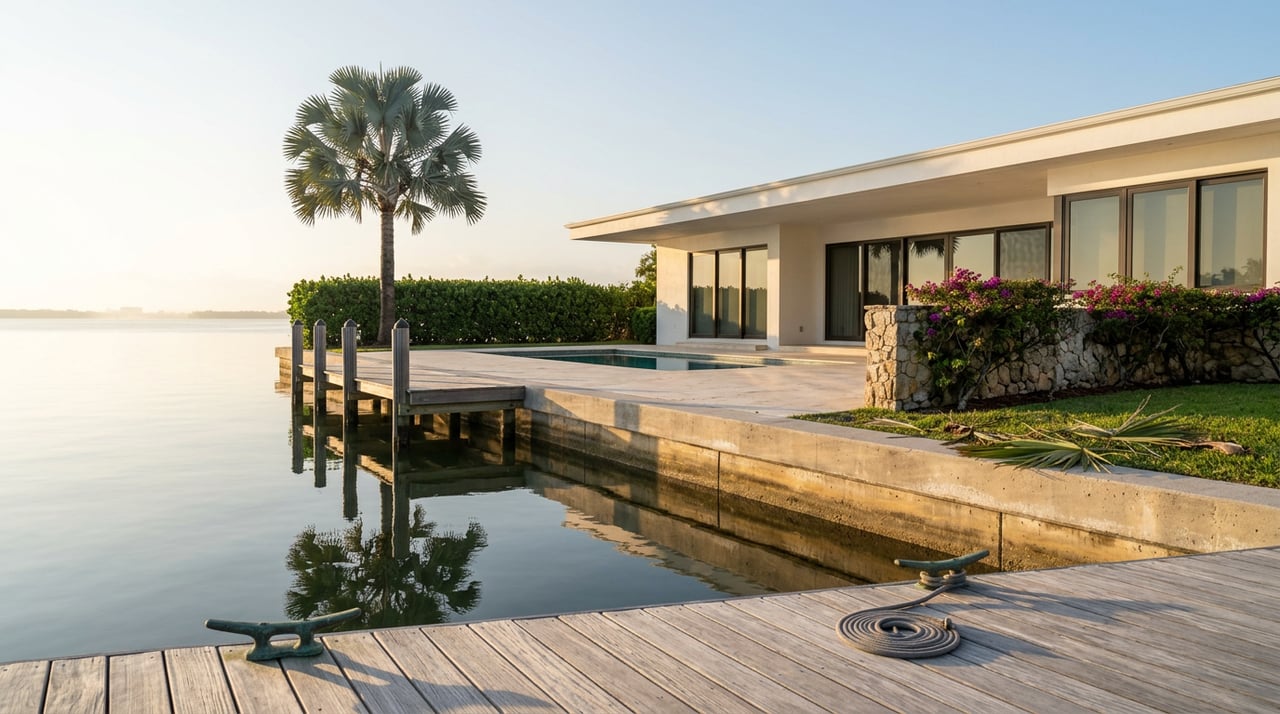
Here is the part that puts the public project in context. Before the city's phase two ever broke ground, the Village Shops had already invested in the seawall that wraps around their own property, just not the part the city owns. That work added roughly 4,300 cubic yards of riprap and 215 reef balls along the shoreline perimeter, designed to slow erosion and give oysters, barnacles, and small fish something to attach to and grow around. Underwater lights went in at the same time, which is why an evening walk past the Village now comes with a decent chance of watching fish move under the surface while you wait for a table.
It is worth being clear about what's public and what isn't here, because the two get confused. The seawall the city is replacing in phases along Gulf Shore Boulevard North is public infrastructure, owned and maintained by the city because a court told it to be. The seawall wrapping the Village Shops' own waterfront, the one that got the reef balls and underwater lights, is a separate stretch that the property's ownership improved on its own, outside the city's project and outside the litigation that produced it. Two seawalls a few hundred feet apart, two different parties responsible for keeping each one standing.
What's actually open while you walk past the construction
None of this has closed the Village down. The six waterfront restaurants are all still operating: Bayside Seafood Grill & Bar, Fish Restaurant, M Waterfront Grille, MiraMare Ristorante, T-Michaels Steak & Lobster, and The Village Pub. If you want a sense of how long some of these tenants have been part of the neighborhood's daily rhythm, William Phelps Custom Jeweler has operated at the Village since 1988, and Whispers of Naples Boutique, tucked behind the fountain, has been run by owner Andrea Ellis for more than fourteen years. Newer additions like Wildflower and BU Club sit alongside those long-standing shops, which is a fairly normal mix for a shopping center that turns over slowly and keeps its anchors.
That mix matters for a practical reason. Construction projects on this scale tend to scare foot traffic away from small retailers even when the businesses themselves are untouched. The seawall work is happening at the property line, not inside the Village, and the restaurants and shops have stayed open through similar disruptions before.
Tested by storms, not just plans
Speaking of staying open, the Village's track record during actual storms is worth knowing if you live nearby and wonder how the property holds up when the water rises instead of when a crew is digging next to it. After Hurricane Milton made landfall in October 2024, the Village Shops on Venetian Bay reopened for business as early as the Thursday following the storm, the day after it passed through. That is not a small detail for a waterfront retail center sitting directly on the bay. It says the drainage, the elevation, and the property management on site were doing their job well before this seawall project ever became a headline.
What this actually means if you live here
The cones on Gulf Shore Boulevard this year are not a sign that something went wrong. They are the visible tail end of a process that started with a hurricane in 2017, stalled in litigation until 2021, and is now finally being paid for and built in phases, with the current one running right past the Village's own property line. Phase one already proved the city can execute this design without leaving the neighborhood in worse shape than it started. Phase two is a bigger stretch of the same fix, funded in part by a grant the city had to go get.
If you are walking the dog past the construction fencing this fall, you are watching the last legal question about who owns this wall get answered with concrete and steel, twelve inches behind where the old one used to be.
If you have questions about how any of this touches a specific property along Gulf Shore Boulevard North or elsewhere in Park Shore, Mary Wolleon is always glad to talk through it. Let's Connect.